
Gauthier Cosyns: basketball referee and high-level student-athlete at IÉSEG
01/13/2026


Gauthier COSYNS is a third-year student in IÉSEG’s Grande École Program, who successfully balances his academic studies with his passion for basketball refereeing. Officiating at Regional 1 and French national youth level, he is also part of the “potential group” of the Hauts-de-France League—an elite program designed to train future top-level referees. We met with Gauthier to talk about his beginnings as a referee and his journey so far.
How did you become a basketball referee?
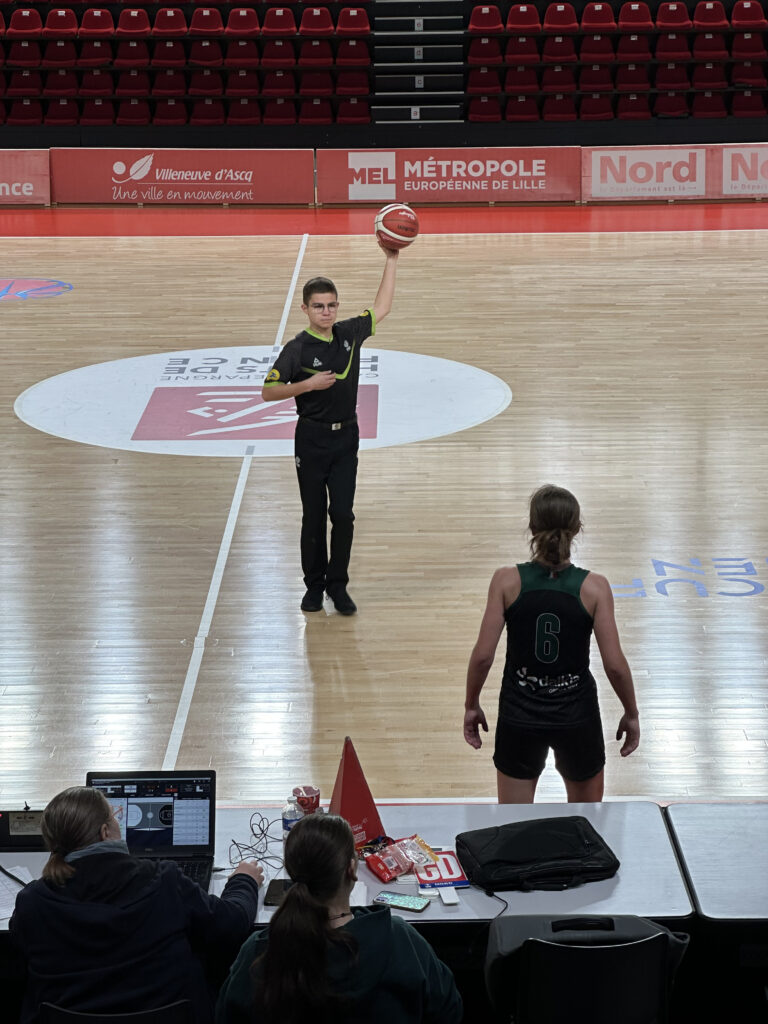
I started playing basketball when I was six years old. There was a shortage of volunteer referees in my club, so I picked up the whistle to help officiate youth games. I enjoyed it straight away and decided I wanted to become an official referee at the age of 12. Step by step, I moved up through the ranks. I reached the regional level four years ago: Regional 3, Regional 2, and now Regional 1, while also refereeing in the French national youth championships.
You’re part of the “potential group” of the Hauts-de-France League. What does that involve?
It’s a selection of 12 young referees under 30 who follow an intensive training programme to reach a high level quickly. We have a lot of video analysis, training sessions on Monday evenings—both on court and via video—and monthly multiple-choice tests mainly focused on the rules of the game. We’re ranked and assessed regularly.
People often think referees know every rule by heart, but there are so many specific rules. The rulebook is about 150 pages long, and the interpretations document is another 150 pages, so we often need to dig into them to find answers.
The goal of this programme, which lasts up to three years, is to reach national level in the short to medium term and to gain the tools needed to reach the top level in the long term.
How can we understand the different refereeing levels?
It starts at departmental level, which is divided into several tiers (3, 2, 1). Then you move up to Regional 3, Regional 2, Regional 1, followed by National 3, 2, and 1. After that comes Elite 2—the equivalent of Ligue 2 in football—and Betclic Élite, equivalent to Ligue 1. That’s the very top.
Currently, I referee at Regional 1 and national youth level (up to under 1 years old). Regional 1 involves senior adult teams from the age of 18 and is the sixth division in France.
What do you particularly enjoy about being a referee rather than a player?
Being at the heart of the game and having an impactful role—making sure the game runs smoothly. It’s a completely different perspective on basketball, but just as interesting. It also requires a real commitment, as much as, or even more than, being a player.
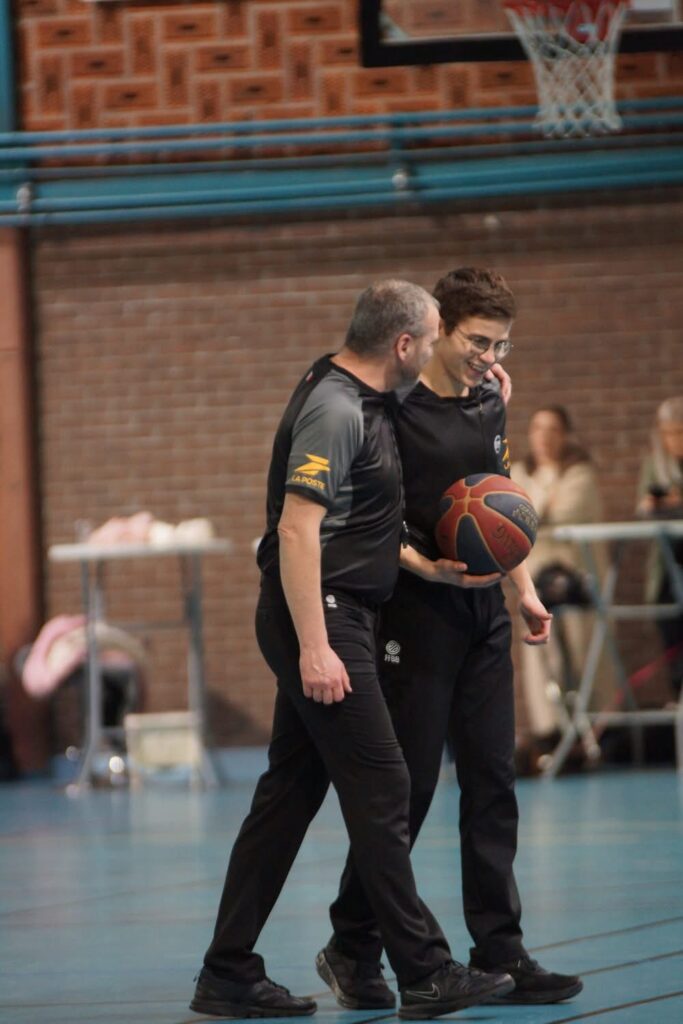
It’s a big responsibility, especially when you start young. You’re right in the middle of the action and exposed to criticism from everyone—players, coaches, parents in the stands. You have to earn respect and stand by your decisions.
Is it a form of personal development?
Absolutely. In refereeing, we often say it’s a school of life. It builds self-confidence. You have to make decisions and stand by them in front of adults who are often far more experienced. You learn responsibility.
We’re trained in stress management, player management, how to deal with inappropriate behaviour and emotions. It gives you valuable experience in handling all of that while keeping a cool head—and that’s not always easy!
You’ve also faced difficult situations on the court…
Yes, unfortunately, every weekend we deal with inappropriate behaviour, whether in the stands or on the court. We’re criticised, and you have to learn to rise above it.
The hardest and most memorable experience was when I was 13. After a game, a coach shouted at me and insulted me, and even tried to fight the opposing coach. I went home that day wanting to quit, but my parents helped me get back on my feet and encouraged me to keep going.
When you’re young, it’s tough because adults can be intimidating. Now I have more perspective and experience to deal with these situations. I try to communicate and stay calm throughout the game. But since I’m young for the level I officiate at, I also need to command respect—it’s a balance between dialogue and knowing when to assert authority.
What does your schedule look like as a referee?
It’s usually every weekend outside of school holidays. I referee between three and four games per weekend, sometimes during the week as well. My weekends are fully dedicated to basketball, so I can’t work or do other activities then. The key is to stay organised and get ahead during the week. Sometimes it’s challenging, but my elite athlete status at IÉSEG now gives me a bit more flexibility.
Is refereeing on a basketball field physically demanding?
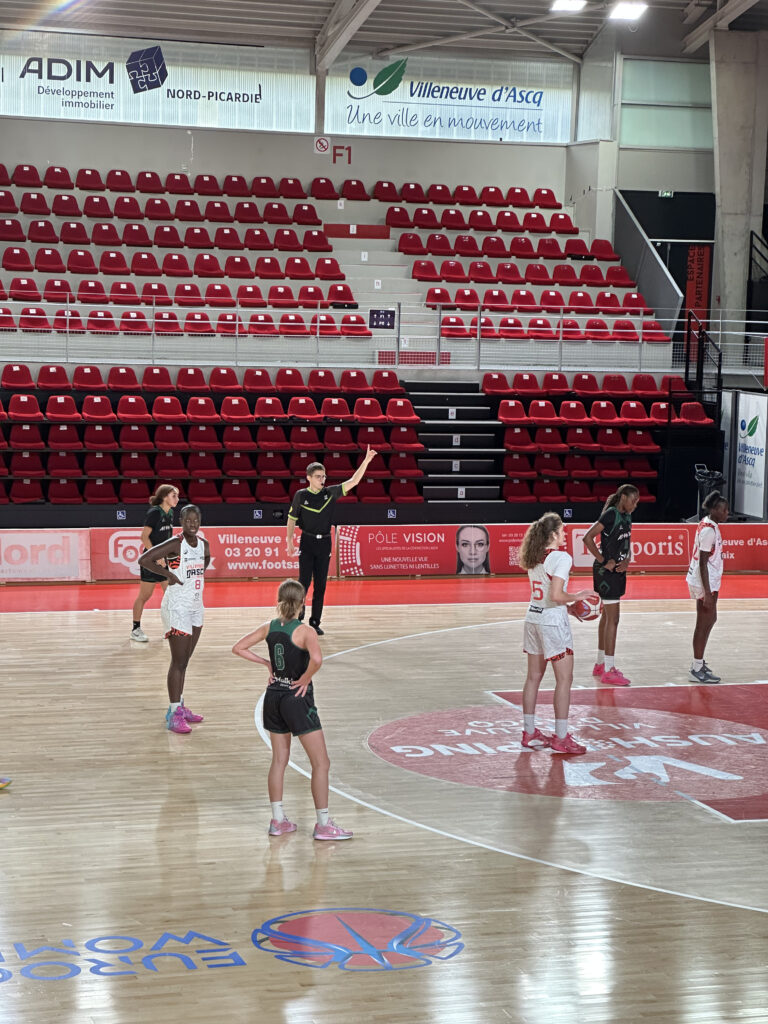
Yes, very much so. We’re physically tested twice a season with the Luc Léger test, which includes different levels—you need to reach level 10. Unlike players, referees can’t be substituted during games; we’re on the court from start to finish.
I do a lot of running on the side to stay fit. Physically it’s manageable, but by the fourth game of the weekend, the mental load is high. You have to stay sharp to judge situations accurately, while players are often playing their first game of the weekend and expect us to perform as if it were our only one.
What does refereeing bring to your life?
It gives you experience that applies directly to real life. It also allows you to meet a lot of people and build friendships. I’d say it’s taught me discipline, but above all self-confidence and how to manage human relationships—learning how to interact with very different personalities, often in emotional and intense situations.
You also created a refereeing school in your club…
Yes! I’m a trainer at the refereeing school I created within my club, which was officially certified by the department last year. There are three referees from the club who have become trainers. We organise training sessions for young people who want to get started in refereeing.
What’s your vision for the future?
In the short term, my goal is to reach national level. In the long term, I want to go as far as possible. If I can, I’d love to reach the professional level, even though it’s still underdeveloped—there are only eight professional referees in France since the start of this season. Before that, there were none at all. Even first-division referees usually have another job alongside officiating, often part-time.
Alongside refereeing, I’d like to work in events or sport. Sports event management would be a dream—particularly project management, logistics and organization.