How Revlys reached €1M in revenue
09/17/2026


Revlys, an eco-responisble travel and events agency, was founded by Axel FENAUX, an IÉSEG graduate from the class of 2018. The start-up is part of the IÉSEG incubator. After his business partner left the company in 2020, Axel had to rethink the business model and make a major strategic shift, moving Revlys from B2C to B2B. Five years after our first interview, we caught up with him to look back on this transformation, the story behind the company’s acceleration, and the new challenges he is now facing.
Where does Revlys stand today, five years after our first interview?
I originally launched Revlys as a B2C business. After my business partner decided to leave to focus on another personal project, I had to rethink how to pivot Revlys. Around that time, a friend reached out to me to organize a corporate retreat. That first experience was the turning point that made me realize we should shift our focus to B2B.
Why is B2B a better fit for your business?
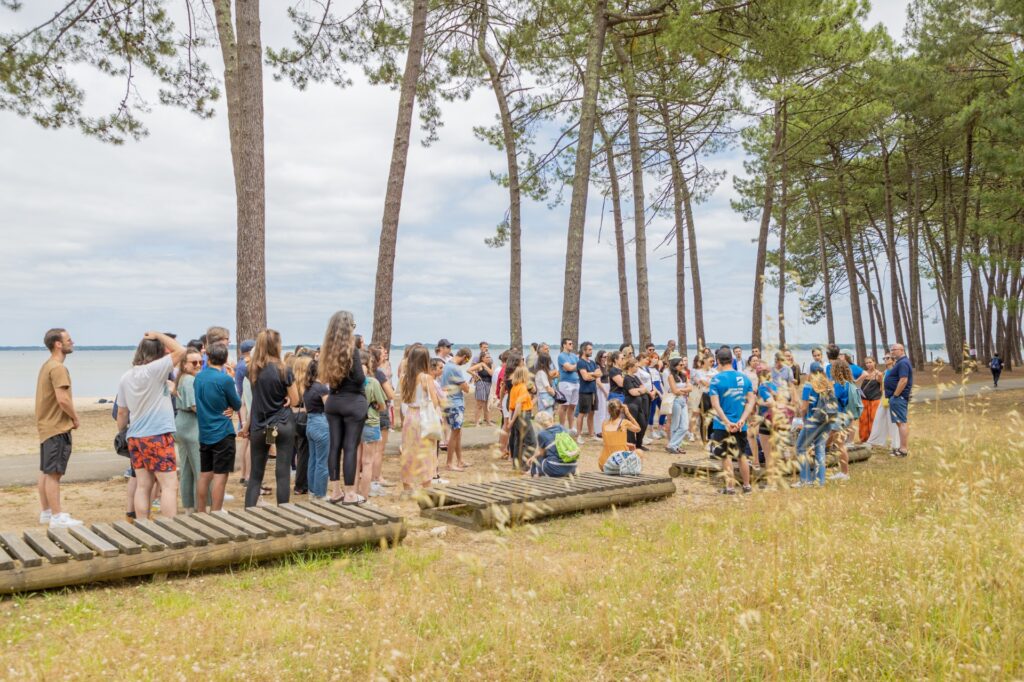
First of all, a company organizing a retreat for 200 to 300 people needs a significant level of support. An HR director, marketing director or communications director simply can’t manage something of that scale on their own, on top of their day-to-day responsibilities.
For individuals, on the other hand, the decision is much more likely to come down to cost and whether they can organize the trip themselves. If they can, they will often choose to do so.
There is also a question of purpose and impact. Helping a group of 300 people organize a low-carbon corporate retreat has a much more immediate impact than trying to convince 150 couples to change the way they travel. With B2B, you can influence a significant number of people all at once.
Was this shift instrumental in reaching €1 Million in revenue?
Yes, absolutely. You could say it was the “secret sauce.” I reached €1 million in revenue in 2025 with around fifteen corporate retreats, including two major contracts worth €250,000 and €300,000.
So, with around twenty retreats, we reached €1 million in revenue. That would be impossible with twenty trips for individual customers: the average value of each booking is simply nowhere near the same.
What challenges did you have to overcome when moving from B2C to B2B?
I had to completely rethink my research and sourcing of venues. My original database was made up of small guesthouses and holiday cottages accommodating between 6 and 30 people. For corporate retreats, I needed venues capable of hosting 50, 100, or even 300 people.
I therefore had to source estates, restored castles and high-end campsites, while staying true to Revlys’ core philosophy: independent venues with character that are deeply rooted in their local communities and surroundings. I work very little with large hotel chains.
I also had to learn the ins and outs of corporate retreats: room layouts, audiovisual equipment, team-building activities, and so on. But above all, I had to understand what companies are actually looking for: strengthening team cohesion, raising awareness around CSR, or simply offering original, low-carbon activities.
What is your approach to sustainability in the events industry?
My approarch is more like “let’s do the best we can”, because I don’t believe it’s possible to be perfect when it comes to being eco-responsible.
There is also a real tension between environmental and social considerations. Should we refuse to fly in employees based abroad in order to reduce the event’s carbon footprint? Or should we bring them together because social connection and team cohesion are essential? For some clients, the answer is clear: the collective comes first.
Similarly, asking employees to spend eight hours on a train simply to avoid a flight isn’t always realistic. I would rather find a sensible compromise than embrace a form of radicalism that can ultimately be counterproductive and discourage people from making any effort at all.
Has the rise of AI over the past five years had an impact on your business?
In B2C, it could have been devastating. Organizing a trip independently can now be almost entirely automated: with a good prompt, AI can generate an itinerary, activities and accommodation options. The added value of a traditional B2C travel agency is inevitably being eroded.
In B2B, however, I see it more as an opportunity. I’m currently developing an automation system that cross-references my accommodation database with a client’s requirements — for example, the travel time from Paris by train or coach — and allows me to identify suitable options much faster.
What can never be fully automated is the human relationship, the creation of bespoke experiences, and local knowledge. That is where the real difference lies, and that is what we do at Revlys: we create experiences that have never been offered to another client at their retreat venue, thanks to our relationships with local partners.
That takes time, human connection and creativity — precisely the things AI cannot replicate.
Is entrepreneurship really a rollercoaster ride?
I’d say it’s more like the Himalayas! Honestly, I’ve come close to giving up several times. But there was always a good reason to keep going, and somehow things would pick up again and the journey would continue. What I’ve learned is that entrepreneurship is, above all, about resilience. I believed in my project — and it turns out I was right to.