Back
L’intelligence artificielle fascine autant qu’elle inquiète. Promesse d’efficacité, de compétitivité et d’innovation pour certains : menace environnementale, sociale et éthique pour d’autres. Entre les discours alarmistes et les promesses parfois démesurées des géants de la tech, il devient difficile de se forger une opinion nuancée.
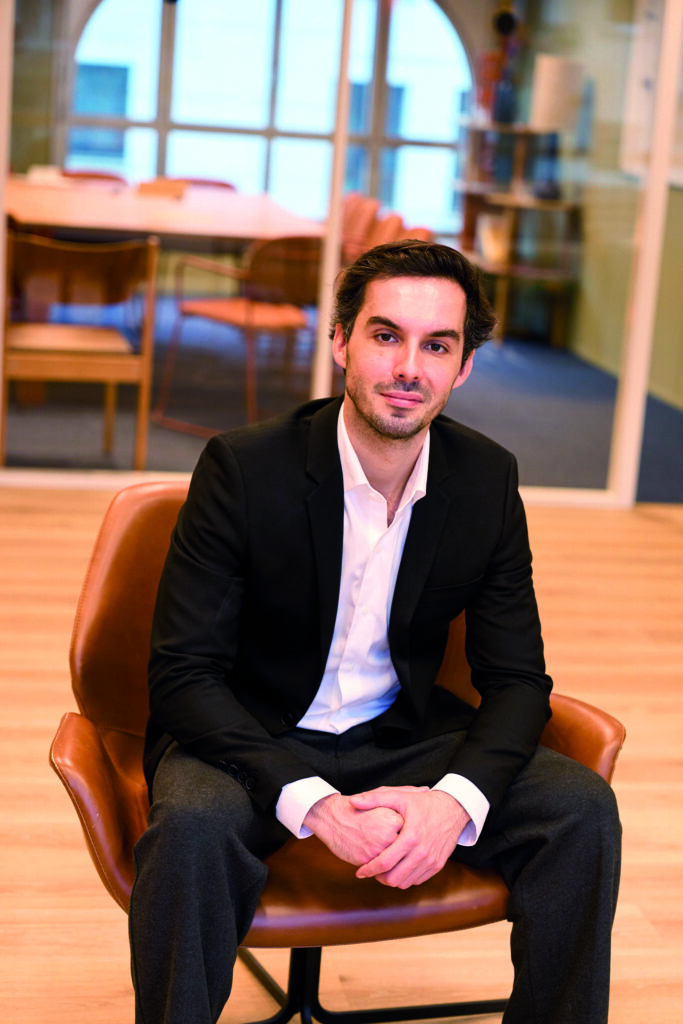
Spécialiste des enjeux de durabilité et associé du cabinet de conseil NSW Conseil, Romain BERROU (diplômé du Programme Grande École en 2015) défend une approche pragmatique : l’IA n’est ni bonne ni mauvaise, mais un outil dont l’impact dépend des choix humains, des cadres réglementaires et des usages. Il invite à dépasser les caricatures et à trouver le bon équilibre entre performance et responsabilité.
Vous vous êtes intéressé à l’intelligence artificielle bien avant que le grand public ne s’en empare. Quel a été l’élément déclencheur ?
Lors de ma thèse (2016-2020), j’ai découvert le machine learning, alors principalement utilisé pour des analyses statistiques avancées. Cela m’a amené à explorer plus en détail la littérature scientifique concernant l’IA qui a connu une forte accélération à partir de 2019. J’ai rapidement commencé à l’utiliser, y compris dans mes premières missions de conseil, en veillant à rendre anonymes les données sensibles. Alors que les gains en termes d’efficacité et en qualité d’analyse étaient évidents, je me suis également interrogé sur l’impact de l’IA sur les enjeux sociaux, environnementaux et de gouvernance. En découvrant l’écosystème open-source et en m’appuyant sur mes compétences en code, j’ai compris qu’il était possible de concevoir des solutions à la fois performantes et plus responsables.
IA responsable : les deux termes sont-ils vraiment compatibles ?
Cette question me rappelle celle que l’on me posait durant ma thèse sur la finance durable. Comme la finance, l’intelligence artificielle est avant tout un outil qui peut être utilisé de manière responsable ou non. La finance est essentielle au fonctionnement de nos économies, mais elle nécessite des cadres et des régulations pour limiter ses dérives ; il en va de même pour l’IA.
Elle présente des risques, des opportunités et des atouts majeurs sur les plans social, environnemental et économique. Elle peut renforcer l’accès à l’éducation et accélérer l’innovation, mais également accentuer les inégalités ou générer des impacts conséquents en termes d’énergie, de CO₂, d’eau ou de ressources rares. À mon échelle, je privilégie des modèles open-source, utilisés en local, avec une totale maîtrise des données. Plus largement, il reste à bâtir collectivement une définition de l’IA responsable, même si des cadres comme l’IA Act européen constituent déjà des avancées importantes.
Que faut-il retenir à propos du cabinet NSW Conseil dont vous êtes associé ?
Il est spécialisé en RSE et accompagne les PME, ETI et fonds de Private Equity dans la structuration et le déploiement de leurs démarches de durabilité. Nous intervenons sur des sujets tels que les certifications et notations extra-financières, la production de rapports RSE, la définition de la stratégie RSE puis de plans d’actions à 100 jours, 3 ans et 5 ans, alignés avec les attentes des investisseurs. Notre approche s’appuie sur le développement de workflows d’intelligence artificielle qui nous permettent d’être particulièrement efficaces, réactifs et compétitifs, tout en maintenant un haut niveau de qualité.
Parcours
Diplômé en 2016 de l’IÉSEG où il réalise une thèse de master sur « l’impact investing », Romain poursuit par un master spécialisé Finance à l’ESCP.
À l’issue de son cursus, un économiste lui propose de mener une thèse en finance durable tout en réalisant des missions de conseil au sein de projets de recherche (grandes banques, assurances et investisseurs européens). Il rejoint ensuite un cabinet de conseil comme expert en durabilité.
Constatant le manque de ressources des PME et ETI sur ces sujets, il se spécialise à l’interface entre entreprises et investisseurs. Enfin, il co-fonde son cabinet de conseil avec deux associés, et intègre progressivement l’IA pour renforcer l’efficacité et la pertinence de ses interventions.
Dans quelle mesure l’IA peut-elle améliorer l’efficacité de vos missions ?
Elle le fait lorsqu’elle est utilisée en complément, et non en substitution de l’expertise humaine. En combinant intelligence humaine et efficience de l’IA, il est possible de gagner en rapidité et en réactivité, mais surtout d’élever le niveau de qualité des prestations. Le temps économisé sur la production de livrables peut ainsi être réinvesti dans la compréhension fine des enjeux des clients et dans l’accompagnement stratégique.
Nous avons par exemple développé des solutions d’IA dédiées aux notations d’EcoVadis qui évaluent la performance des entreprises sur 100 points. En combinant notre expertise et nos outils, nous améliorons en moyenne la note de nos clients d’environ 20 points, tout en leur faisant économiser jusqu’à 80 % du temps mobilisé. À partir de ce travail, nous générons des rapports RSE complets, cohérents avec la stratégie de l’entreprise et répondant aux attentes des investisseurs, financeurs et grands clients, tout en limitant fortement la charge pour les équipes internes.
Évaluer l’impact environnemental d’une technologie ou d’un outil IA n’est pas simple : comment vous y prenez-vous ?
Il faut raisonner par échelle et transparence. L’impact environnemental de grands modèles globaux est difficile à évaluer, faute de données publiques précises. À l’inverse, avec des modèles open-source utilisés en local ou sur des serveurs situés en France ou en Europe, l’évaluation est plus simple : on mesure la charge de calcul, on estime l’énergie consommée et on applique le mix énergétique concerné, avec un stress hydrique faible. L’usage d’algorithmes plus efficients réduit également la sollicitation du matériel et la pression sur les ressources critiques. Dans ces conditions, et avec des modèles conçus de manière sobre, les impacts restent limités.
Vous avez développé vos solutions IA via des serveurs éco-responsables : qu’entendez-vous par là et comment le choix de l’open-source contribue-t-il à une IA plus éthique ?
Aujourd’hui, de nombreux modèles d’IA performants sont disponibles en open-source. Lorsqu’un modèle open-source est utilisé en local, les données restent sur nos ordinateurs et l’énergie consommée est parfaitement identifiable. Si davantage de puissance est nécessaire, ces modèles peuvent être déployés sur des serveurs éco-responsables et souverains, situés en France ou en Europe, qui garantissent un accès exclusif aux données et une optimisation de leur impact environnemental. Cette approche nous permet de conserver une maîtrise complète des flux de données, entrants comme sortants, et une visibilité totale sur l’infrastructure utilisée.
À l’inverse, les modèles grand public hébergés sur des serveurs tiers impliquent une perte de contrôle sur le traitement et la localisation des données. À nos yeux, une IA éthique et responsable repose donc avant tout sur la transparence, la sobriété et la souveraineté des choix technologiques.
On a malgré tout du mal à voir comment concilier développement exponentiel de la puissance des modèles IA et réduction de l’empreinte carbone : n’est-il pas déjà trop tard ?
Le discours est très proche de celui tenu sur le changement climatique : il n’est jamais trop tard ! Chaque tonne de CO₂ évitée réduit la gravité des scénarios futurs. La question de la course à la puissance des modèles est complexe. Il existe aujourd’hui un vrai débat sur l’atteinte d’un plateau technologique, c’est-à-dire sur le rapport entre puissance de calcul mobilisée et gain réel en qualité de résultats.
Ce débat dépasse d’ailleurs le champ technologique et touche directement les marchés financiers : quelles promesses de l’IA seront réellement tenues ? À court terme, une piste clé réside dans l’arbitrage entre très grands modèles et d’autres plus modestes, souvent suffisants pour des usages opérationnels, bien moins énergivores et plus maîtrisables. En parallèle, il faudra compter sur l’innovation pour réduire l’empreinte des centres de données. Mais non, il n’est pas trop tard : c’est précisément maintenant que les choix comptent le plus.
Vous intervenez auprès des entreprises pour évoquer notamment l’IA responsable. Comment ce sujet est-il perçu dans le monde professionnel ? Quel message souhaitez-vous transmettre ?
L’approche est généralement très bien accueillie. Les publics sont souvent soulagés de voir que des professionnels prennent ces enjeux au sérieux et qu’il existe déjà une littérature structurée permettant d’identifier les principales problématiques ainsi que des pistes de réponses concrètes. Cela contribue à dépasser les discours caricaturaux, trop alarmistes ou excessivement enthousiastes.
Le message que je cherche à faire passer est volontairement équilibré : il n’existe ni vision entièrement pessimiste, ni vision totalement idéalisée de l’IA. Comme tout outil, l’IA est façonnée par celles et ceux qui la conçoivent et l’utilisent. L’avenir de l’IA ne sera pas dicté par la technologie seule, mais par les choix humains qui l’accompagnent. Mon ambition est de participer activement à des usages qui créent de la valeur durable pour la société.
Comment envisagez-vous l’évolution de l’intelligence artificielle au cours des cinq à dix prochaines années ?
Je ne crois pas à l’émergence d’une intelligence artificielle générale dans un horizon de cinq à dix ans. Je pense surtout que les usages concrets de l’IA seront, dans la pratique, moins révolutionnaires que ne le laissent entendre les discours portés aujourd’hui par les grandes entreprises technologiques. Une partie des décideurs restera durablement réticente à confier à une IA des sujets profondément humains ou stratégiques. Je fais également l’hypothèse d’un éclatement de la bulle IA à court terme, possiblement dès 2026, qui laissera place à une approche plus réaliste, centrée sur les risques et les opportunités réelles.
Cela n’empêchera pas des transformations majeures du marché du travail, avec la disparition de nombreux emplois. Certains secteurs seront particulièrement bouleversés, notamment ceux liés à la génération d’images, comme l’audiovisuel ou le jeu vidéo. À terme, une grande partie des contenus standardisés, y compris dans le conseil, sera produite par l’IA, tandis que la décision stratégique restera un domaine fondamentalement humain.
Comment convaincre le grand public de s’engager à leur tour dans une IA plus responsable ?
Je leur dirais avant tout de s’engager dans la durabilité, de bien comprendre ses problématiques et ses principales thématiques. L’IA est aujourd’hui très populaire, avec un impact sans doute significatif, mais il ne s’agit que d’un sujet parmi d’autres dans le contexte de la durabilité. Il faut à mon sens voir cet outil comme un formidable générateur d’opportunités pour traiter les enjeux urgents liés à cette thématique : limitation des émissions CO₂ de l’énergie, de l’industrie, du transport, du bâtiment et de l’agriculture, réduction de la consommation d’eau et de matières premières, etc.
C’est d’ailleurs l’objectif que nous nous sommes fixés avec mes associés chez NSW Conseil : utiliser l’IA responsable pour aider les entreprises sur le terrain à faire mieux et plus vite, dans des conditions optimales. Trouver le bon équilibre entre profiter au maximum des nombreuses opportunités de l’IA tout en minimisant son impact et ses risques est et restera notre préoccupation quotidienne.
Cet article a été rédigé par Luna Créations pour le magazine IÉS, le magazine de IÉSEG Network, l’association des diplômés de l’École.