
Two students cross the Atlantic and part of the Pacific ocean aboard a sailboat
10/15/2026


During their gap year, IÉSEG students Augustin CLARET DE FLEURIEU and Jean-Baptiste QUINTIN turned their dream into reality: crossing the Atlantic and part of the Pacific aboard an 11-metre sailboat they bought on Leboncoin and renovated themselves. Joined by a third crew member, Gabriel, and supported by the association La Guilde, they spent a year facing storms, discovering unforgettable stopovers, and reconnecting with the essentials of life. From Brittany to Senegal, from Panama to Polynesia… meet two students who are not afraid to take on a challenge.
How did you come up with this idea?
Jean-Baptiste: We shared the same dream: we wanted to go on an adventure, push our limits, experience something intense and emotional, and put ourselves in situations that would really test us. There were three of us involved in the project, and all three of us are Sea Scouts. After many conversations and plenty of dreaming, we came up with the idea of taking a gap year to sail to Polynesia. Originally, we had planned to go all the way to Australia, but that would have meant rushing through some of the destinations along the way.
Augustin: It was also about taking a different path from the one that seemed to be laid out for us. We thought that if there was ever a time in our lives when we could choose a different path, this was it — and now was the time. Our goal was to “get back to basics.” It may sound a little cliché put that way, but when you’re three people on a boat, crossing oceans with no connection and no phone, you find yourself doing simple things and learning how to live together. We really achieved that goal.
What did everyday life on board look like?
Augustin: There were two very different types of days. When we were at sea, our main activities were reading, looking after the boat and finding new topics to talk about to pass the time. Your perception of time changes completely during long crossings.
Then there were the night watches. During the day, all three of us were on board, and we were all skippers, each responsible for the boat. At night, we took turns standing watch alone on deck, making sure everything was running smoothly. We had time to think, listen to podcasts and admire landscapes we had never seen before: star-filled skies and incredible colours. At the beginning, our night watches were short but physically and mentally demanding. By the end of the project, we were doing four-hour watches each, with no difficulty at all — and enjoying them just as much.
Jean-Baptiste: When conditions were good, life at sea was actually quite simple: reading, fishing, cooking and talking about all sorts of things. But conditions can change very quickly. The wind can suddenly strengthen or change direction, and you have to be able to switch from relaxation to “action mode” in a matter of seconds.
When conditions deteriorate, everything becomes more difficult. Even making yourself a coffee or preparing a meal can become a challenge! Our boat was quite old, so it also made a lot of noise. That could be stressful when we couldn’t work out where a strange sound was coming from. After several difficult days at sea, setting foot back on land was a huge relief.
How did you prepare for such an adventure?
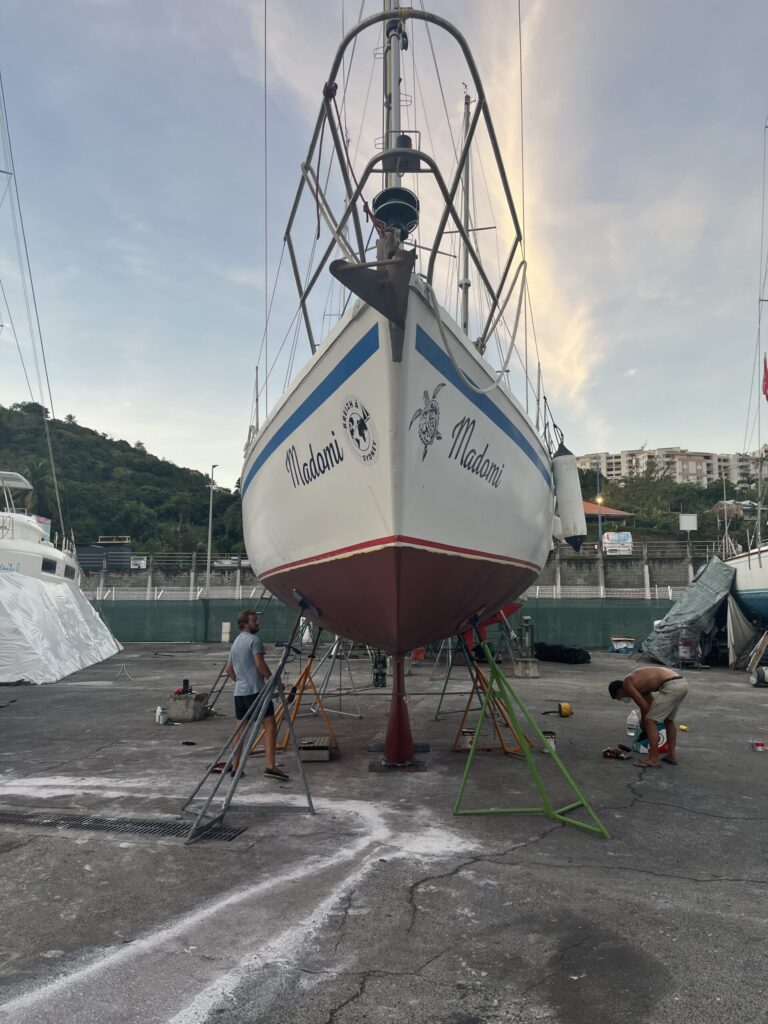
Augustin: The project itself lasted a year, but we spent a year and a half preparing for it. In the end, preparing the adventure was probably more demanding than actually carrying it out! We had decided that we wouldn’t set off until we had established an association and secured support from companies. We spent countless hours approaching potential partners to help us finance the purchase and refurbishment of the second-hand boat.
We eventually managed, just in time, to convince several companies to support a project that was not always perceived as particularly serious. We received a lot of rejections, but our efforts ultimately paid off. The donations helped us purchase the boat, which we later sold in Tahiti, with the proceeds donated to La Guilde.
Jean-Baptiste: I would say that this was the most difficult part, because we knew that once we had a boat, the project would become a reality. Without sponsors, however, there was no project, and realistically, we knew there was a good chance it might never happen. It was particularly challenging in terms of motivation: after receiving a rejection, you had to find the energy to make the next call. Ultimately, it was a very valuable learning experience. It taught us to persevere and not give up, even when things get difficult.
Augustin: As far as sailing was concerned, all three of us were Sea Scouts — essentially Scouts with an additional focus on sailing — and that’s how we met. For five consecutive years, we spent a week every summer taking part in sailing courses. After three years, we obtained our “boatmaster” certification, which allowed us to take responsibility for a vessel. However, this was still coastal sailing: setting off in the morning and returning in the evening.
We put a lot of emphasis on safety. We sought advice from professionals, and Jean-Baptiste completed an offshore survival training course. We also learned a great deal through hands-on experience, and benefited enormously from the support and knowledge-sharing within the sailing community.
Jean-Baptiste: We had a very tight schedule, little flexibility and a limited budget, which meant we had to make choices. Since training courses were expensive, we prioritised survival and safety in the event of a major incident. I therefore completed an offshore survival course, while Augustin obtained a marine radio communications qualification and trained in navigation, mechanics and first aid, including how to stitch wounds.
Which stopovers were the most memorable?
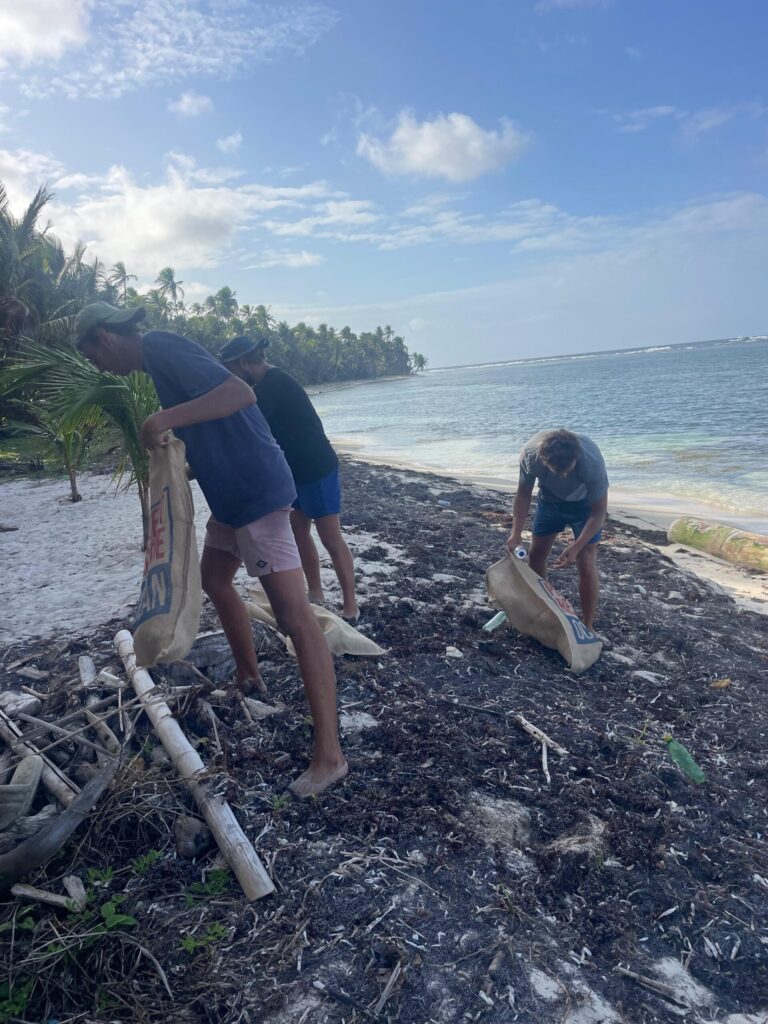
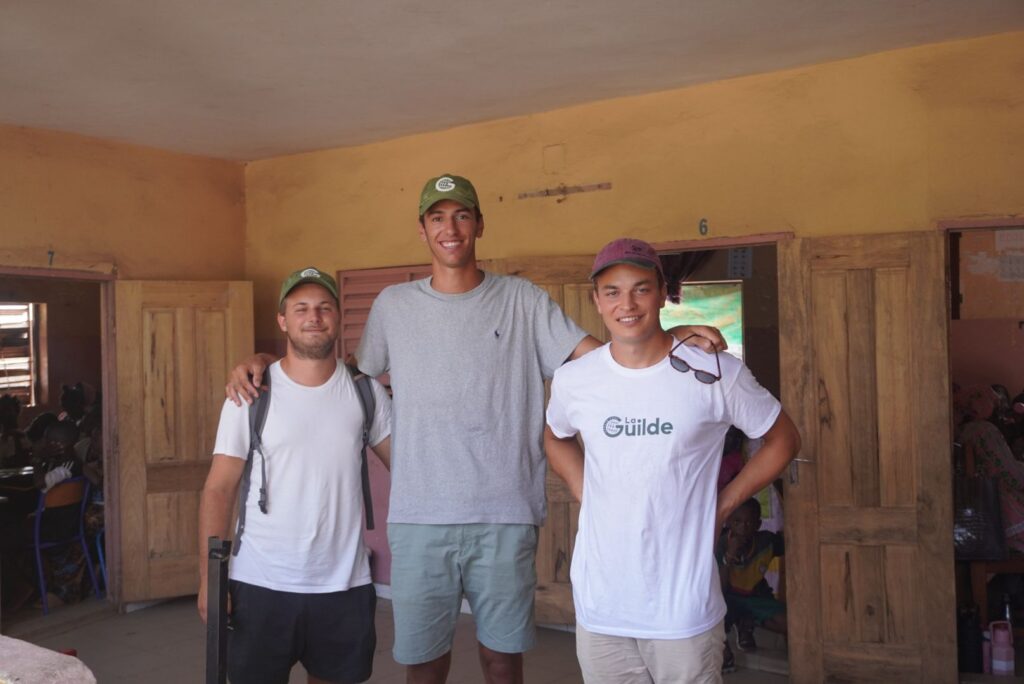
Augustin: A major part of the project revolved around La Guilde, the association we worked with to develop the project. It raises funds in France to support small organisations around the world, and its adventure programme was a natural fit with our project. Our role was to act as ambassadors for La Guilde: visiting these organisations, spending time with them and producing short reports to showcase their work.
Our first memorable stopover was Dakar, Senegal. It isn’t part of the traditional Transatlantic sailing route, but we stopped there to meet with La Guilde. It was a real change of scenery, and working with the association allowed us to immerse ourselves in a local initiative rather than experiencing the country simply as tourists.
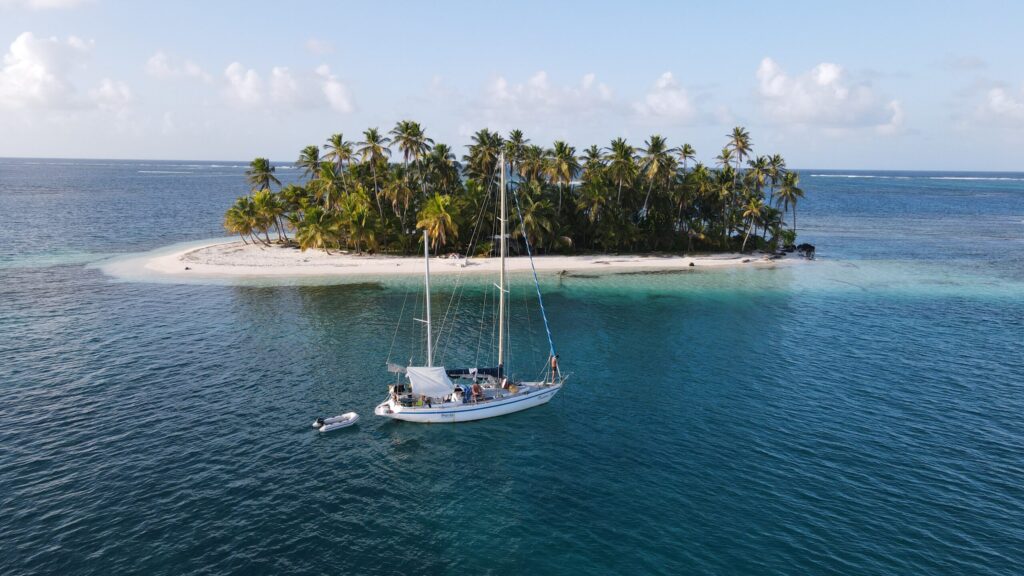
Our full itinerary was: Brittany, Spain, Lisbon, the Canary Islands, Dakar, Cape Verde, Martinique, the Grenadines, Colombia, the San Blas Islands, Panama and the Panama Canal, followed by the Galápagos Islands and, finally, Polynesia.
What was the most difficult moment of the crossing?
Jean-Baptiste: Our departure was a particularly memorable moment for all three of us. We were incredibly excited to set off after three months spent repairing the boat, but the conditions were extremely challenging. The boat was crashing into the waves, and we tore a sail on the very first night. It was both a baptism of fire and a reminder that sailing is no game. Fortunately, we had several sails on board, and we were able to repair the damaged one once we reached Dakar.
During the Atlantic crossing, we also had two “boat hitchhikers” on board — people looking to join a boat for a crossing. One night, a squall came through: a mass of clouds bringing heavy rain that can cause the wind to double or even triple within seconds. You have to react immediately, but on this occasion, the person on watch tried to deal with it alone without waking anyone else.
I was sleeping in the cabin and was the first to wake up when I heard the sails flapping violently. Outside, torrential rain was falling, the wind was extremely strong, and our forward sail — our main source of propulsion and impossible to replace — had become caught on a cable and was starting to tear. The boat became uncontrollable, with three- to four-metre waves. We all ended up at the bow, being thrown around in every direction as we tried to free the sail. Thankfully, everything ended well, but it was a real ordeal!
Augustin: I also remember an incident in Polynesia, as we were leaving an atoll. We were running behind schedule and decided to leave at night, with a stronger current than expected and increasingly heavy seas. As we approached the pass in the middle of the night, we gradually realised just how large the waves were. But with the current pushing us forward, turning back was no longer an option.
The pass was extremely narrow, surrounded by shallow waters, and our ability to manoeuvre was severely limited. For around ten minutes, we did everything we could to stay on course, with waves of nearly five metres crashing over the boat. Above all, we were trying to avoid ending up on the rocks. After moments like that, nobody says anything. You simply realize that it’s over and that, in the end, everything is fine.
Jean-Baptiste: I think that sums up sailing very well: once you’re in that situation, there is no way out. You have no choice but to keep going and do everything you can to make sure it ends well.
What did you learn about yourselves from spending so much time at sea, in such a confined space, as a group of three?
Jean-Baptiste: We know each other inside out now! It taught us a lot about how we respond to situations that we rarely encounter in everyday life, such as extreme boredom. Overall, living together as the three of us was actually easier than I had imagined.
Augustin: Going on holiday with friends is easy; sharing an adventure like this is something completely different. For me, the biggest lesson was adaptability: learning to put your own wishes or ego aside when necessary so that you can move forward together.