
IÉSEG Teaching Excellence Awards 2026: keeping students at the heart of learning
11/25/2026


Through interactive simulations, serious games, storytelling and reflection, the seven winners of IÉSEG’s 2026 Teaching Excellence Awards demonstrate how different teaching approaches can make students active participants in their learning, with professors playing an essential role in designing and guiding these experiences.
The IÉSEG Teaching Excellence Awards 2026 recognize seven professors whose approaches embody the diversity of teaching excellence across the School’s programs. Their practices share a common thread: encouraging students to do more than absorb information, by creating opportunities to experiment, question, collaborate and reflect.
At a time when artificial intelligence is prompting new questions about education, their work highlights the fact that innovative teaching does not necessarily mean using more technology. It means designing meaningful learning experiences, with students at the center and professors guiding the process.
Different tools, a shared focus on active learning
The approaches of Paulo MARZIONNA, winner of the Digital Award, and Chavi Chen, joint winner for Post-Graduate Programs, offer two complementary examples of this philosophy.
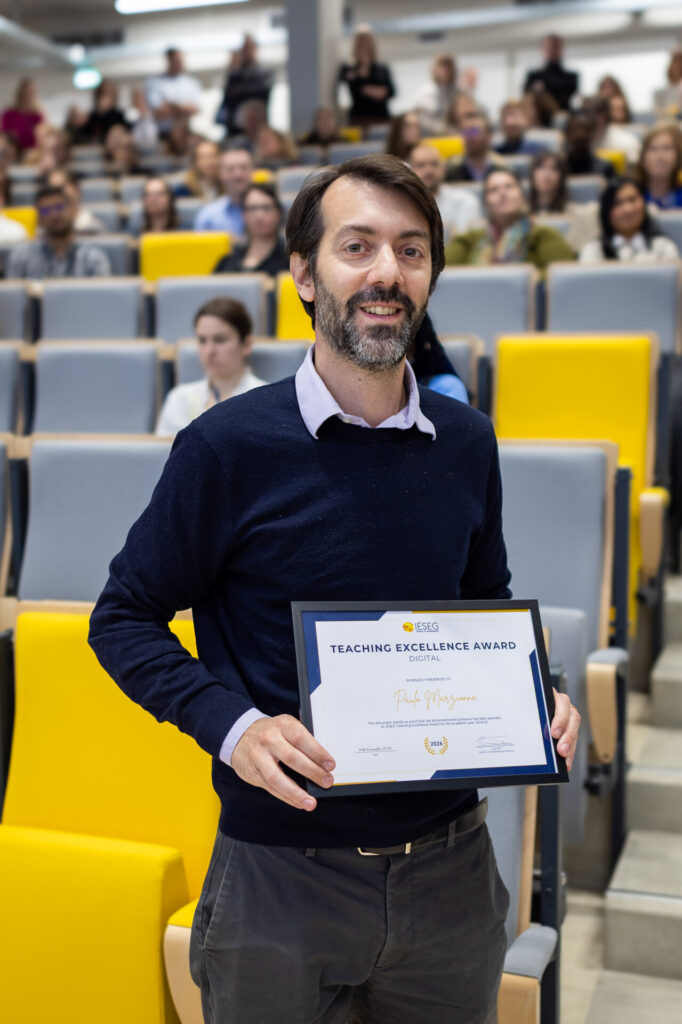
Using AI coding assistants, Paulo developed four web applications that allow students to practice negotiation, make decisions and receive real-time feedback. The tools enable him to monitor several negotiations simultaneously, adjust the rules during an exercise and use live dashboards to support classroom discussions.
In his Bank Game, students explore how cooperation and competition change when communication becomes possible or a negotiation nears its end. Here, AI supports the professor’s role as a designer of learning experiences. The simulations provide material for discussion, while the professor helps students interpret their decisions and connect them to negotiation concepts.
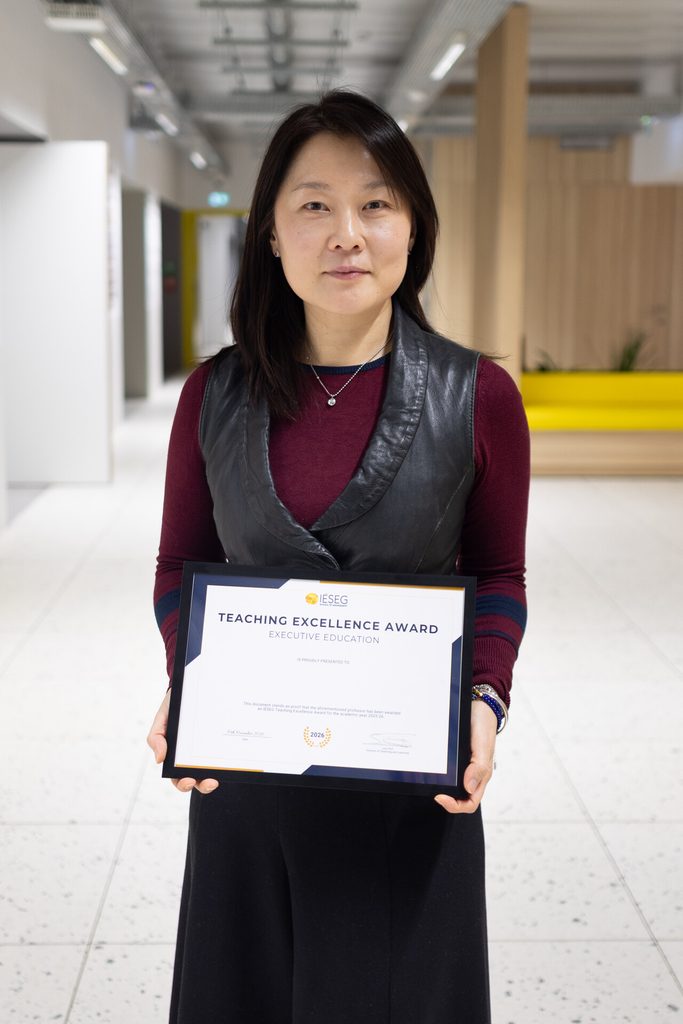
Chavi takes a different route, combining slide-free teaching with serious games, role-play and real business cases. In her educational board game, Pactopolis: Grow, Negotiate, Sustain, students represent different sectors of a city and negotiate decisions involving economic performance, collaboration and environmental sustainability.
Students experience a challenge first, reflect on their choices and then connect those experiences to theory. They also practice presenting recommendations without PowerPoint, developing their ability to communicate ideas directly. Whether digital or physical, these activities make learners’ decisions the starting point for learning.
Creating space for curiosity and independent thinking
Claire PHILIPPE, also a joint winner for Post-Graduate Programs, brings storytelling and real-world experiences into beginner-level French teaching. Students follow a fictional character, Emily, through a mystery set in Paris, supported by videos, chatbot conversations and an escape game developed with the CETI – Center for Educational and Technological Innovation, within the Teaching & Learning department. Peer mentoring with French-speaking students, intercultural activities and autonomous learning stations provide further opportunities to practice. Visits and practical challenges extend the learning experience beyond the classroom, connecting language with situations students can encounter in everyday life.
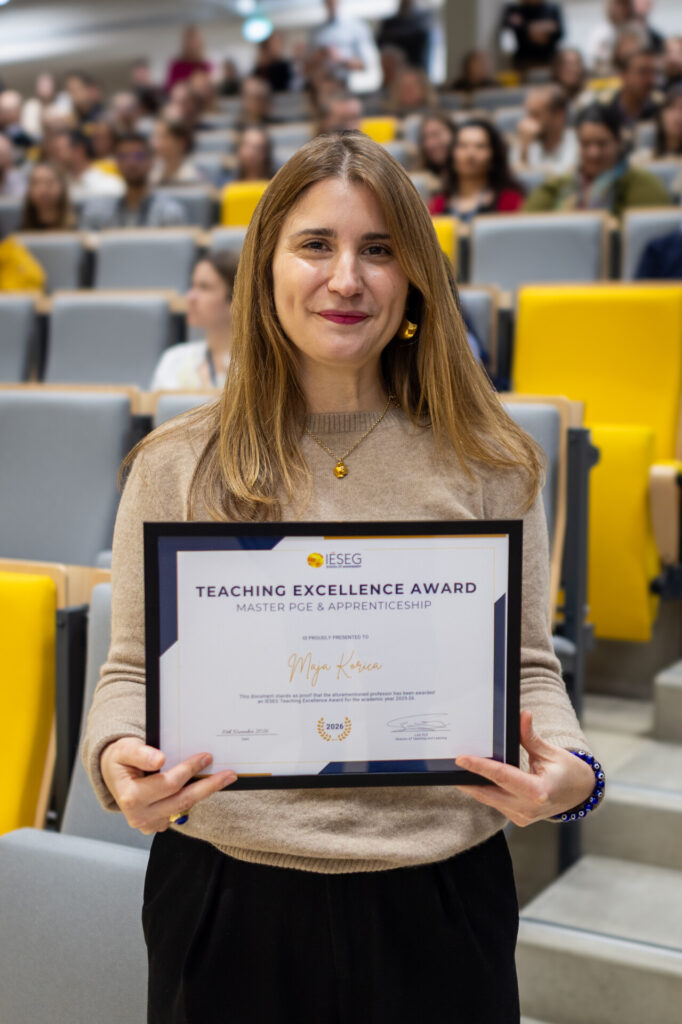
For Maja KORICA, winner for Grande École Program Master and apprenticeship programs, active participation also means making time for reflection. At the end of each class, students complete a ten-minute handwritten exercise, explaining a concept in their own words and identifying what resonated with them personally.
She provides individual feedback and revisits common misunderstandings in the following session. Alongside immersive learning and real-world business cases, she encourages students to close their laptops during group work, creating space for dialogue and independent thinking in the age of AI.
Supporting learners’ academic and personal development
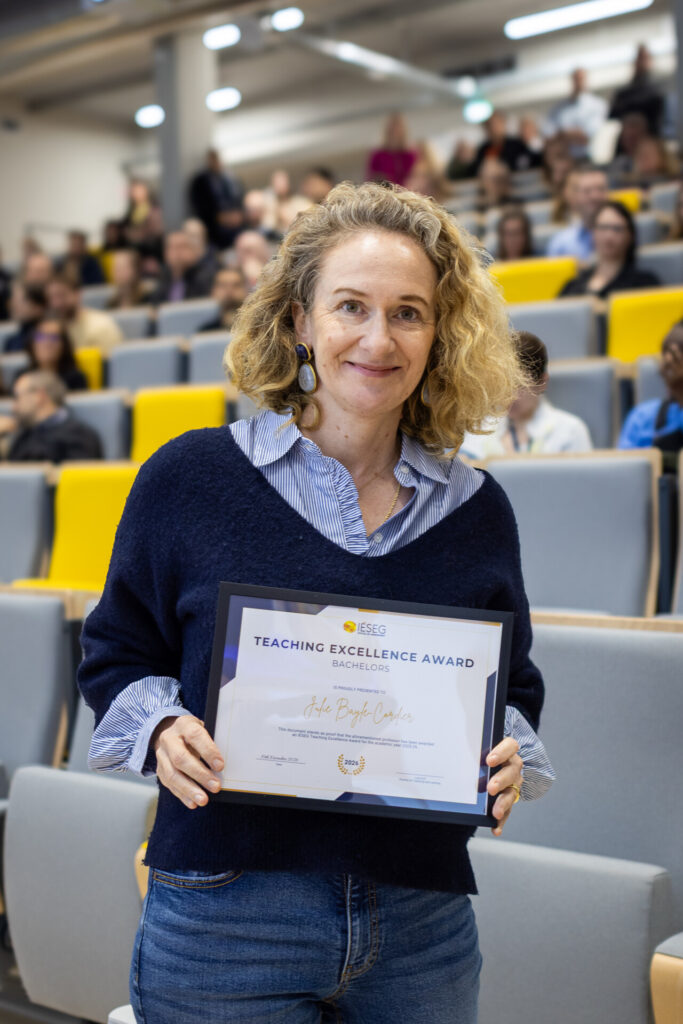
Julie BAYLE-CORDIER, winner for Bachelor’s programs, combines theoretical learning with mindfulness exercises, Socratic questioning and personal reflection. Her approach encourages students to examine their assumptions, understand their reactions and develop greater awareness of themselves and others.
Through courses and programs including The Mindful Manager and Be Well, she connects management education with wellbeing, self-awareness and responsible leadership.
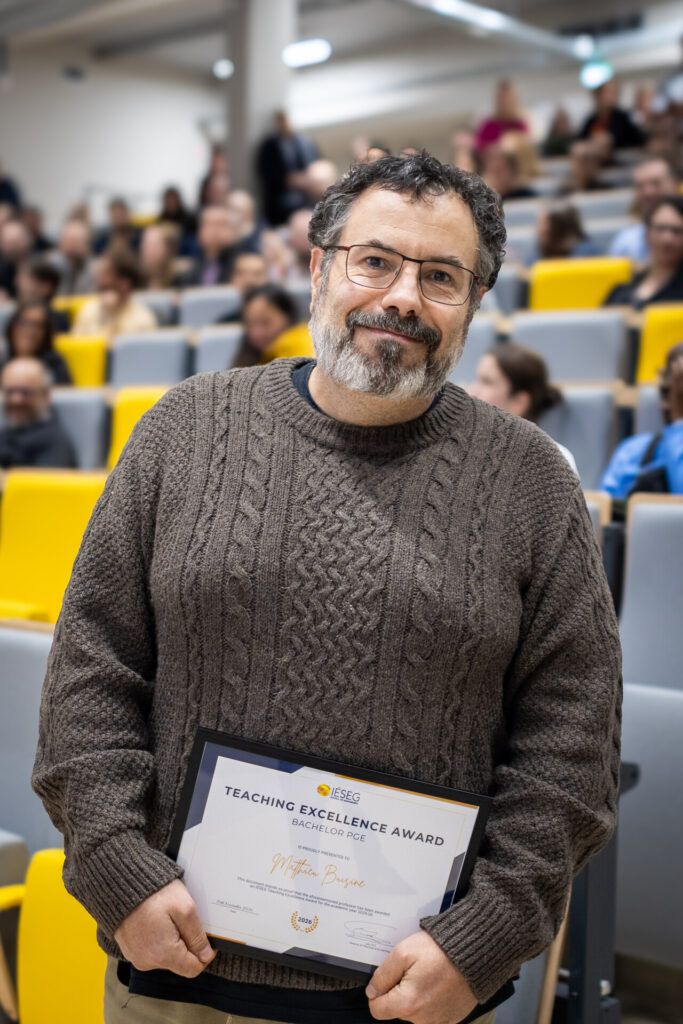
Matthieu BUISINE, winner for Grande École Program Bachelor, focuses on making statistics and econometrics more accessible. Structured explanations, practical business applications, educational videos and a dedicated quantitative methods support website help students revisit concepts and learn at their own pace.
His teaching also incorporates real company data collected through interdisciplinary projects, linking quantitative methods to practical business questions. To conclude, he provides consistent feedback and analyses the student data from the learning resources used to identify where he can improve his teaching.
Professional experience as a foundation for learning
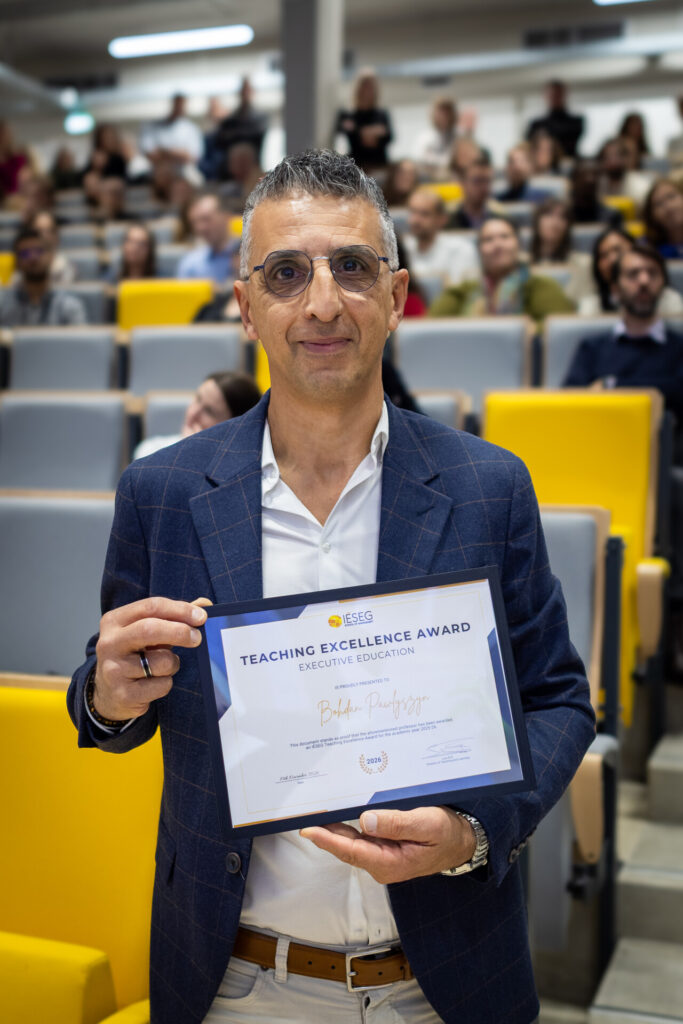
For Bohdan PAWLYSZYN, winner for Executive Education, the participants’ professional experience is a foundation for learning. His sessions combine short theoretical inputs with simulations, role-plays, case studies and peer discussion. In his Team Performance teaching, participants explore trust, collaboration, communication and group dynamics through practical activities. Reflective debriefing helps them analyze what happened and identify actions they can apply in their workplaces.
Across these seven approaches, the professor’s role remains central: choosing meaningful challenges, supporting participation, providing feedback and helping learners make sense of their experiences. The awards highlight not one model of innovative teaching, but rather a shared commitment to making students active contributors to their own learning.