
Armand SOULEROT: a rising star in American football with a promising future
11/13/2026


At just 21, he has already represented the French national American football team, competed at the highest level in Europe, and gained his first professional experience abroad. Armand SOULEROT is a student at IÉSEG (Grande École Program) with top-level athlete status. He is balancing a demanding academic program with the early stages of his American football career, playing the key position of running back. He reflects on a journey built on hard work, discipline, and perseverance, despite the challenges along the way.
When did you start playing American football?
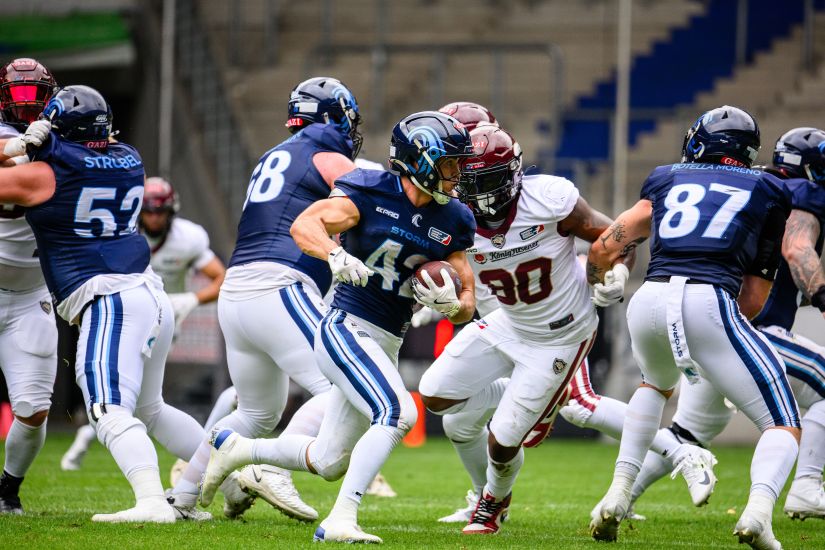
I played rugby for a few years before becoming interested in American football. I played my first season at 15. After taking a few years off due to COVID and, unfortunately, an injury, I returned to the sport in 2023. I quickly reached a high level of competition in Europe. After completing my first full season in 2024, I became the youngest player ever called up to the French national team at the age of 21. I was also part of the national team’s October 2024 campaign.
Since last year, I have been playing during the summer at the highest level of European American football, in a professional league called AFLE (American Football League Europe). Last year, I played in Copenhagen, Denmark. I also played for a Paris-based team, the Paris Lights. At the end of the season, I was shortlisted as one of three nominees for the 2026 Youngster of the Year award, recognizing the league’s best young player. It was a real achievement and a wonderful way to end the season, which had been physically demanding and challenging.
How did you reach this level and establish yourself as one of the best young players?
In the United States, everything is designed to give student-athletes the best possible conditions to succeed both academically and athletically. This type of support system is still relatively underdeveloped in Europe. However, thanks to my elite athlete status, IÉSEG has always been very accommodating and has enabled me to pursue my athletic career alongside my studies. That said, it still requires a lot of sacrifices. I train twice a day, almost every day: I work out at the gym five to six times a week and practice on the field four times a week. These are long days on top of my classes, and sometimes I also have a part-time job. My schedule is therefore extremely demanding.
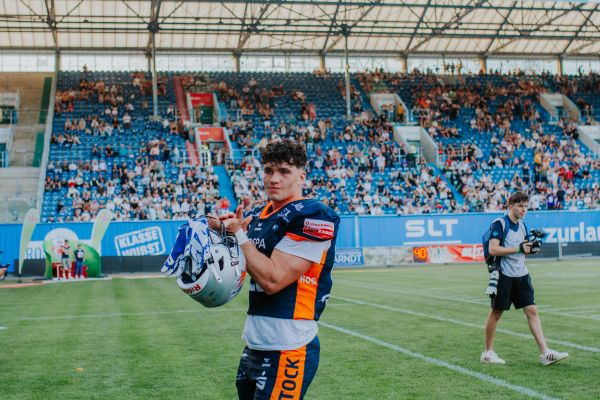
It may sound a little cliché, but perseverance really does pay off. During the three years leading up to my first full season—the one that earned me a place on the French national team—I trained constantly. And once I finally got that opportunity, things moved very quickly.
One of the great things about American football is that the season takes place in the summer, which means I can play anywhere in France or even abroad without disrupting my studies. Training camps begin in April, followed by the regular season from May through August, with the championship game taking place in early September. The season may seem short, but the sport is extremely intense and physically demanding. Injuries are common, affecting the wrists and ankles, for example, as well as, of course, the issue unfortunately so closely associated with American football: concussions.
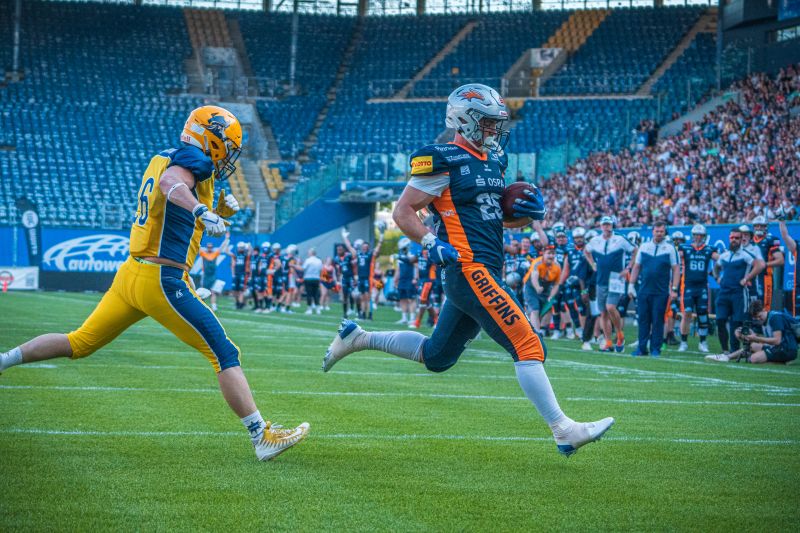
Last year, I got my first professional opportunity in Germany’s second division. At first, it was frustrating because I had a hamstring injury that forced me to miss the first two games. But I performed very well in the following three games, scoring seven touchdowns in three games and putting up some impressive stats. I was then approached midway through the season by a Danish team, the Nordic Storm, the only undefeated team in the European league. They needed a replacement for an injured player. I was playing in the second division at the time, so this meant moving up two levels. It was an incredible opportunity!
What does the sport bring to your life?
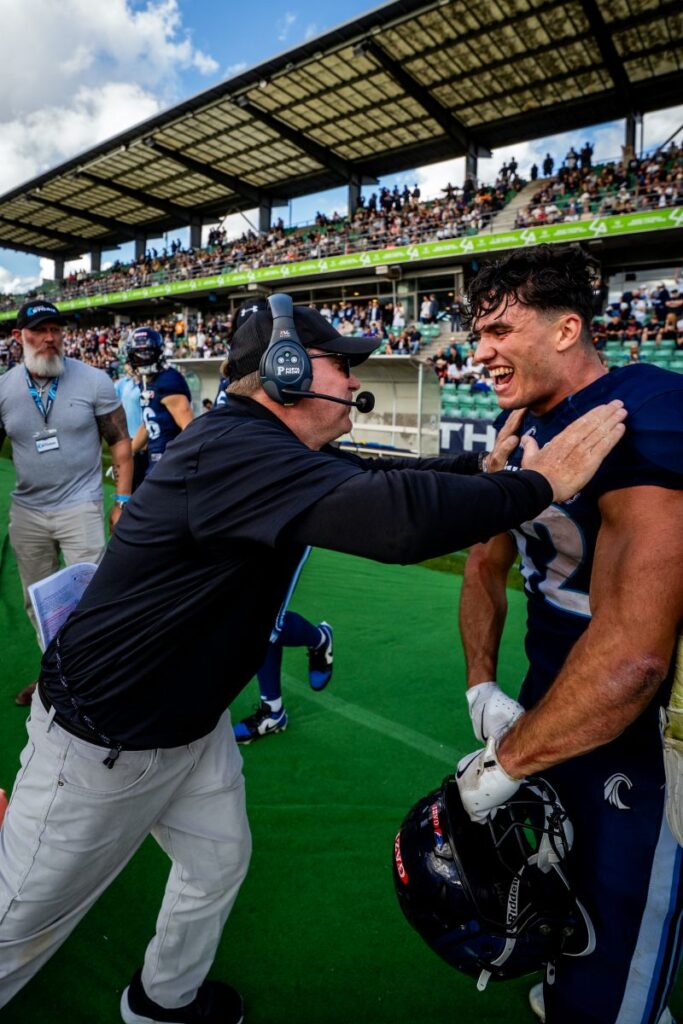
It has taught me discipline and rigor. When people hear “American football,” they often picture a contact sport where everyone just crashes into each other and gets hurt. In reality, it is a highly structured sport, built around short plays lasting five or six seconds, followed by a 30-second break to regroup and get into position. Everything is precise and coordinated. Coaches call specific plays and combinations, and every player has a very clearly defined assignment. For example, you might be instructed to run five meters, then take a 45-degree angle before changing direction. You rely enormously on your teammates doing their jobs properly. For a play to succeed, everyone has to execute their assignment correctly. It therefore requires a great deal of discipline, teamwork, and precision, as well as the physical commitment that comes with the sport.
Rugby vs. American football: what are the main differences?
Broadly speaking, the two sports are quite similar: they both involve an oval-shaped ball, tackling opponents, scoring in the end zone, and kicking conversions between the uprights. There are plenty of similarities. The main difference is that in rugby, passes can only be made backward, whereas in American football, forward passes are allowed. American football is all about gaining territory. The objective is to advance 10 yards in four downs. If you succeed, you earn another set of four downs to gain another 10 yards, and so on. You can also score on a single play—you don’t have to advance just 10 yards. For example, if I hand you the ball, you run the length of the field, and score a touchdown, that’s great! But at a minimum, you need to gain those 10 yards within four downs.
Another major difference is the equipment. In American football, helmets are mandatory. They have a face mask that protects the lower part of the face and wrap around the entire head. We also wear shoulder pads to protect our shoulders, chest, and back. Players often wear gloves to get a better grip on the ball. Our pants, which look a bit like compression tights, also have built-in padding to protect the knees, thighs, and other areas. It’s a bit of a double-edged sword: the equipment is designed to protect us, but it can also be used as a weapon during contact. Taking a helmet to the calf or thigh at full speed is definitely not pleasant!
I play a position called running back. The quarterback hands me the ball, and I run with it, trying to find a gap, evade tacklers, and gain as much yardage as possible. It’s a great position because running backs are often the players who score touchdowns and put points on the board. But there’s a downside: we’re also among the players who get tackled the most—constantly, in fact!
What has been the toughest challenge in your young athletic career?
I would say it was the summer of 2025, in Germany, when I got my first professional opportunity as a player. During the very first training camp, I picked up a minor hamstring injury that kept me out for a month. I could feel the pressure from the management, who were considering bringing someone else in to replace me. I kept thinking: “I’ve worked so hard to get here, and now this…” But in the end, it really shows how life works, and it taught me an important lesson: my most difficult moment was followed by my best one, because I was subsequently called up to join the best team in the European league.
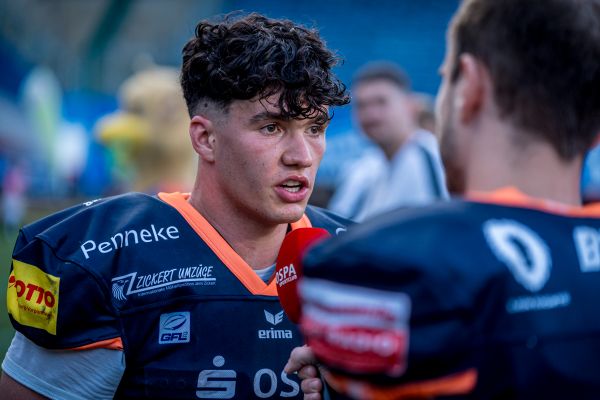
What qualities do you think are essential to succeed in this sport?
Discipline. As I mentioned earlier, this is a sport where you simply cannot afford to miss practice, or even train on your own without your teammates. You depend so heavily on one another that you need the discipline to train together and learn the playbook inside out, so you know exactly what to do on the field whenever the coach calls a play.
It can also be frustrating not to get the ball very often during a game. But when a teammate has possession, your job is to clear the way for them. In American football, when a teammate is carrying the ball, I need to protect them and prevent opponents from tackling them.
Where do you see yourself in five or ten years? What is your dream today?
The ultimate dream is to reach the highest level of the sport: the NFL in the United States. The most realistic path would probably be to start by playing in the Canadian Football League (CFL), which is considered the second-highest level of professional American football in the world and offers more opportunities for European players.
My goal would be to receive an invitation to their scouting camp in March. They invite a large number of Canadian college players and some Americans, but occasionally they also invite young European players who have had outstanding seasons. I hope to be among those selected for the tryouts.