
Agathe DUCHET-SUCHAUX, student and elite fencer: “I would never have become who I am without fencing”
07/29/2026


At 18 years old, Agathe DUCHET-SUCHAUX is balancing two demanding lives. As a first-year student at IÉSEG and an active member of the School’s Junior-Enterprise (IÉSEG CONSEIL), she is simultaneously pursuing an elite fencing career that began in her childhood. Behind the French championships, the European Circuits, or the Olympic dream lies another reality: daily training sessions, sacrifices, injuries, fatigue, and the constant mental demands required by high-performance sport.
Yet, there is also everything fencing has given her: the daily support of her family, discipline, the ability to bounce back after failure, very strong human bonds, and a form of resilience that now carries over into both her studies and her personal life.
Between passion, a fragile balance and the quest for excellence, Agathe reflects on what it means to grow up with elite sport, and learning to build her life around it without ever losing herself.
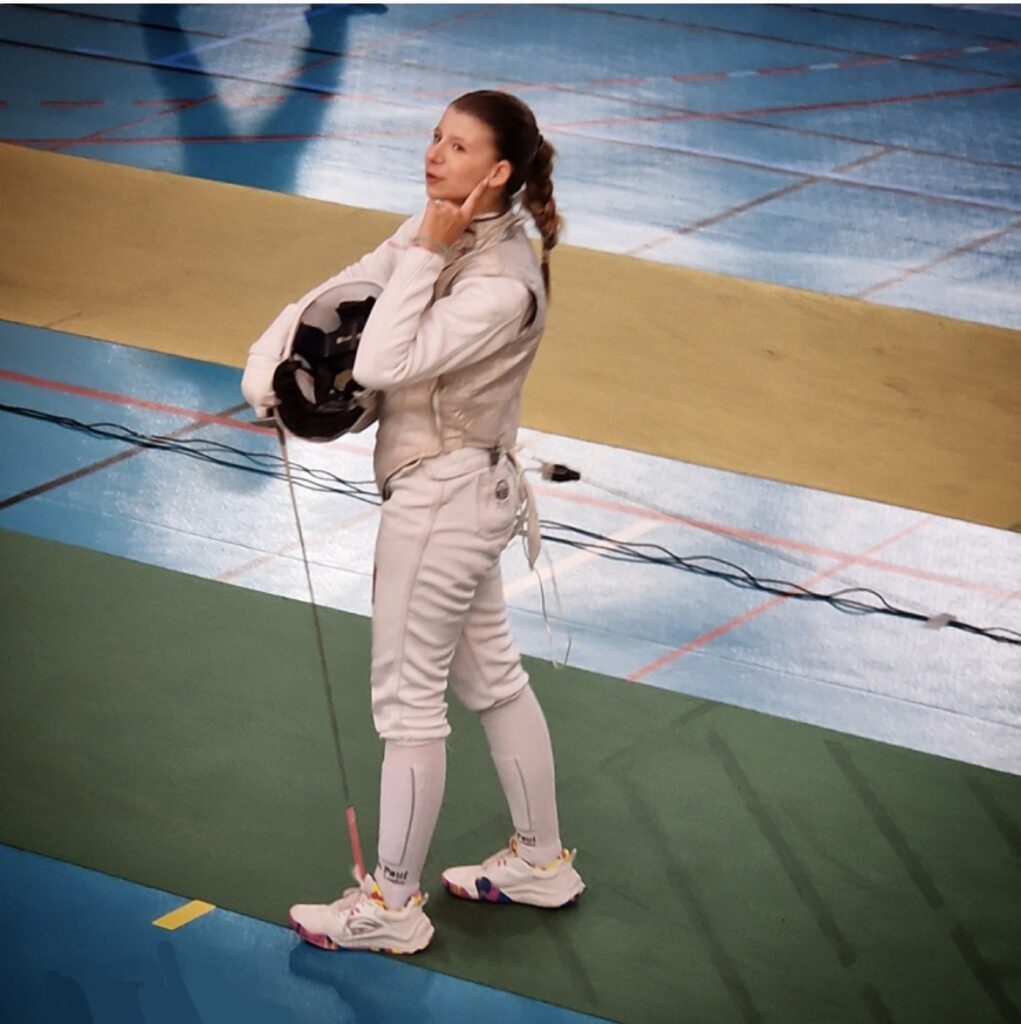
How did fencing become part of your life?
I started fencing at a very young age, when I was barely five. But this sport was already an integral part of my life, even before I was born, as it is so deeply rooted in my family’s history. My uncle fenced at the international level: he competed in World Cups and earned numerous selections for the French national team. My grandfather was the president of one of the largest clubs in the region, and my father and sister also practice it. So, it was only natural for me to become a fencer too.
Since I was little, I’ve always been very competitive and combative. I needed a sport where I could test myself against others. Fencing fits that desire perfectly because it blends physical confrontation with strategic thinking. I started competing at the age of seven. The real turning point came around the age of twelve, when you move into a completely different level of competition. You go from competitions with twenty or thirty young people to events that sometimes attract more than 150 fencers.
Why did you choose the foil?
The foil was the most popular weapon at my club. It is the weapon everyone starts with, and I chose to specialize in it because it suited me perfectly. It offers a very good balance between the saber, which is highly explosive and codified, and the épée, which is more focused on pure reflection. In foil fencing, there is a very strong strategic dimension, along with a whole system of rules of right-of-way and refereeing that makes analyzing your opponent essential. It was this combination that immediately appealed to me.
What do you enjoy most about fencing?
Above all, the thinking process. You cannot fence instinctively without analyzing. Even when I was very young, after training sessions, I would think back to what I had done and the adjustments I needed to make. This constant reflection is essential to me.
I also deeply love the relationship with the opponent. You cannot win alone: you are facing another person, another mind. This psychological dimension makes the sport fascinating.
Fencing is also an extremely demanding sport physically. It requires cardio, muscular power, and flexibility all at once—a combination that’s quite rare in a single discipline.
But what I love most of all are the human connections this sport has allowed me to build. My coaches have played a huge role in my life, particularly Pascal DAIZE and Paul GRANDIDIER, who supported me throughout my teenage years. They knew my sporting difficulties just as well as my academic or personal doubts. Fencing became a second family. I have spent my entire life there, met my best friend, Myrtille GERARD, and built incredibly strong relationships.
What competitions have you participated in?
I competed for several consecutive years in the French Championships, both individually and in teams. I represented my high school in the UGSEL (French School Sport Federation) competitions, which was a wonderful experience. I won several titles with my high school, earned the title of French vice-champion in the team event in 2022, and won the gold medal at the UGSEL Championships in 2023. In the U15 category, I was crowned French vice-champion in the first division team.
I have always competed in the first division of my age category, which is already a great achievement! But the most important competition I have taken part in remains a World Cup stage held in France in 2023 and 2024. I was fortunate enough to be selected twice for this event, and facing the best fencers in a World Cup leg was an incredible experience!
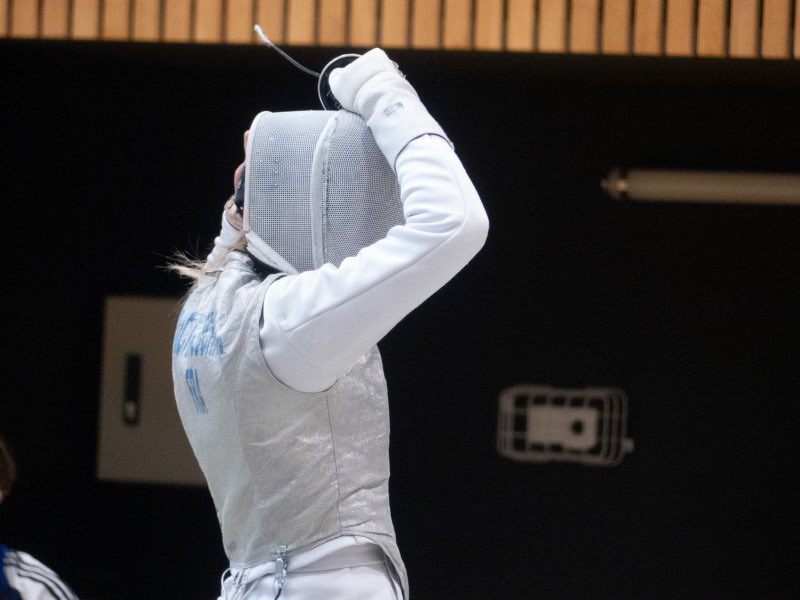
Were the Olympic Games a personal goal?
Yes, absolutely. For a long time, it was a dream, until I was sixteen. Over time, I became aware of certain realities: in our sport, resources and structures are mainly concentrated in the Île-de-France region (around Paris). For me, living in Nancy, I lacked that density of competition and daily competitiveness that you find in those major clubs or national training centers. Even though I trained immensely, in a region less geared toward elite sport, you eventually hit a glass ceiling.
My parents also pushed me to focus on my studies. Sometimes I resented them for it, but today I think they were right. Without them, I probably wouldn’t have the academic path I have today.
What does elite practice actually require on a daily basis?
Elite sport requires an enormous amount of discipline. At one point, I was training every single day: strength training, fencing sessions, competitions on the weekends… It was an extremely intense pace. But what people see the least is everything else around it: the travel, the fatigue, the diet, the sleep, the recovery.
A fencer’s first sponsor is their parents. Competitions are very expensive: fuel, hotels, meals, travel… I was incredibly lucky to have parents who were very present. My father helped me watch my nutrition, and my mother helped me a lot with my studies so that I could maintain excellent academic grades.
A athlete’s life inevitably requires a lot of sacrifices… When my friends were going out in the evening or celebrating birthdays on weekends, I was at training or in competitions. But I never experienced it as a frustration because it was my passion.
Arriving at IÉSEG this year, I also discovered a different kind of balance. Having left the family home, I had to learn to manage my studies, sport, fatigue, meals, and social life all by myself. At first, there is a sense of euphoria: you want to do everything, experience everything. Then, fatigue eventually catches up with you. You have to (re)learn to make choices. There have been times when I had to turn down important social gatherings because I had a competition the following weekend.
What do non-athletes find hardest to understand?
I think they find it hard to understand why we keep going despite failure. In high school, my friends couldn’t understand how I could lose several competitions in a row and go straight back to training the next day as if nothing had happened. But fencing taught me something essential: failure is part of sport, and part of life. Even the very best lose a lot. The primary quality fencing gave me is the ability to question myself. Understanding that some defeats are entirely down to you is a crucial step. I learned to accept failure, which wasn’t always easy. In fact, I worked with a mental coach who helped me immensely. And then there is discipline. Motivation is always high at the start of the season. But what keeps you going over the long term is discipline.
Why did you choose IÉSEG?
I wanted to pursue ambitious studies without completely giving up my sport. I chose IÉSEG because I am highly drawn to the double degree with CentraleSupélec, particularly for its engineering aspect. When I arrived at the school, I discovered the High-Level Athlete (SHN) status, and I was thrilled to be able to obtain it. Some academic tracks would not have allowed me to continue fencing under good conditions. Thanks to IÉSEG, I can both pursue demanding studies and fence at an elite level.
The High-Level Athlete status provides me with flexibility. In particular, it allows me to justify more absences related to competitions and travel. During the second semester, I went through a very intense period with a lot of competitions and immense fatigue. Being able to adjust my schedule on an ad-hoc basis truly helped me. Beyond the practical side, there is also genuine recognition. The professors understand the constraints of elite sports. When you explain to them that you were absent for a competition, they look at it differently, and that is very rewarding!
How do you balance sport, studies, and student association involvement?
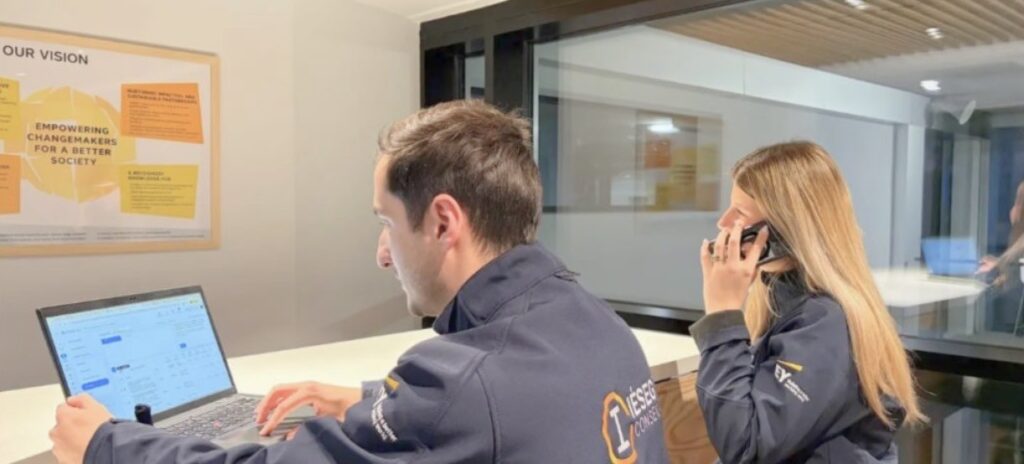
That is probably the hardest part. This year, I joined IÉSEG CONSEIL Lille as a business development manager, which represents a significant commitment. Finding a balance between studies, sport, association work, and my personal life has been a real challenge.
There is no miracle method: everything relies on consistency. You have to work consistently to succeed academically, just as you have to train consistently to perform in sport. This year, I also learned to become completely independent. Before, my parents drove me to training and managed a lot of things for me. Today, I have to organize everything on my own. It is a highly demanding balance, but it is extremely character-building.
How does fencing influence your academic journey and your career ambitions?
At 19 years old, I have spent more time on fencing strips than anywhere else! This sport is a part of me; it has shaped me, both mentally and personally. Fencing has taught me to question myself, to manage failure, and to accept that sometimes, despite hard work, things do not turn out the way you want them to. When I had to take a makeup exam for one of my courses in the first semester, it was the first time in my life that had ever happened to me! Thanks to sport, I managed to keep things in perspective. I told myself that it was just part of the journey and that I needed to learn to bounce back.
Fencing has passed on so many mental strengths to me: knowing how to pull myself together, continuing after a setback, fighting for what I truly want, and accepting difficult periods without giving up. All of these skills serve me at IÉSEG, but also in my social life and my professional commitments. Managing the work within a department of a Junior-Enterprise at age 18 requires immense organization, discipline, and adaptability. It is not always simple, but I constantly find the reflexes and qualities developed through sport in everything I do.
Today, I am very proud to be a high-level athlete, a student in the Grande École Program, and a business development manager at IÉSEG CONSEIL Lille all at once. When I look back at my journey, none of this would have been possible without fencing.
Looking back, what are you most proud of today?
I truly believe that what I am most proud of is never having given up. A good athlete is not just someone who wins. It is, above all, someone who returns to training after a defeat, who accepts failure, and who keeps working.
I said dozens of times that I was going to quit fencing. Yet, the very next day, I was back at training—not out of obligation, but because I deeply loved this sport. I know I would never have become the same person without fencing in my life.